The Soul of the Urban Forest
In the heart of our concrete jungles, trees often serve as steadfast neighbours. They are the lungs of our streets and the providers of our shade. But as our climate shifts, even these giants can falter. In one local neighbourhood, a towering elder tree, weakened by two successive extreme weather events, finally had to be brought down for safety.
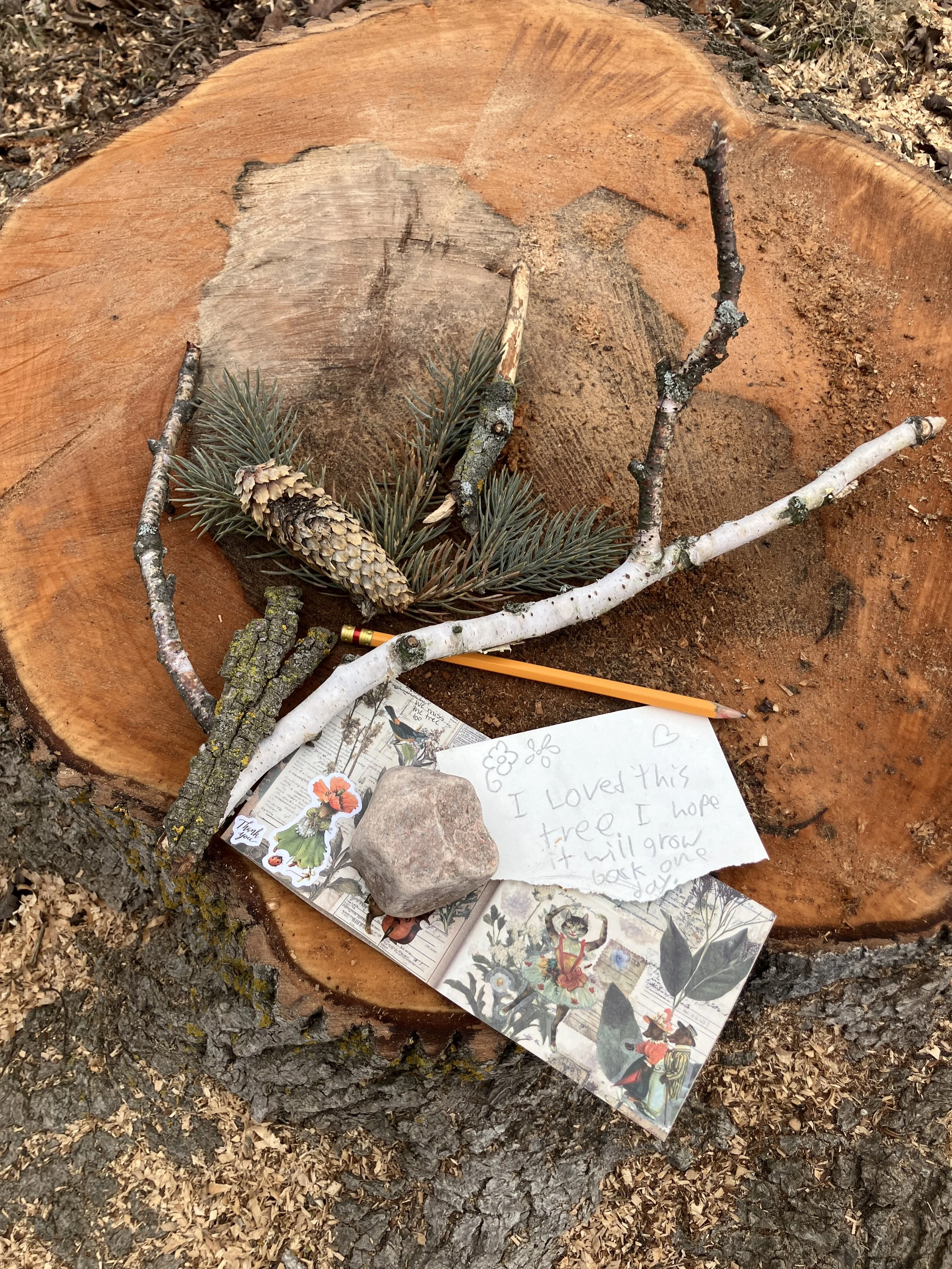
What remained was a raw, flat stump, a stark void where a lush canopy once ruled. Yet, this stump quickly transformed from a symbol of loss into a small, makeshift altar of urban connection.
A local child was the first to reach out, leaving a carefully arranged collection of spruce and birch twigs and pine cones atop the wood. Beside these treasures lay a handwritten note that demonstrated the impact this giant tree quietly had on the community: "I loved this tree. I hope it will grow back one day." The response from the landowner was equally poignant, acknowledging a shared grief: "We miss the tree too."
The Soul of the Urban Forest
This quiet exchange illustrates a profound truth: trees are not merely "municipal assets" or landscaping features. They are emotional anchors. In urban spaces, where nature is often partitioned into small squares, a single tree becomes a piece of shared history.
Trees stand as sentinels against the rising heat and storms of a changing climate. They provide a sense of permanence and peace amidst the rush of city life. They bridge the gap between generations, connecting a hopeful child and a grieving adult. Trees are essential to our lives.
The loss of this tree was a consequence of a changing world, but the tribute left behind is a testament to the human spirit. It reminds us that as long as we cherish our green neighbors, we will continue to plant, protect, and dream of the day the canopy returns.