

Trust and Competence
By Mark Cullen
Chair, Trees For Life
I want to begin this message with a huge thank you. Thank you for reading our newsletter, for subscribing and thank you for supporting Trees For Life. Your support, whether you are a volunteer tree planter or a donor, is the life-blood of our organization.
A recent report in Philanthropy newsletter tells us that the charity sector in Canada has experienced a “crisis of competence” in recent years. Public trust has dropped from 57% to 35% in Canadian charities and donors are moving away from supporting “good intentions” toward supporting “expert execution.”
Allow me to address the topic of “trust” for a moment.
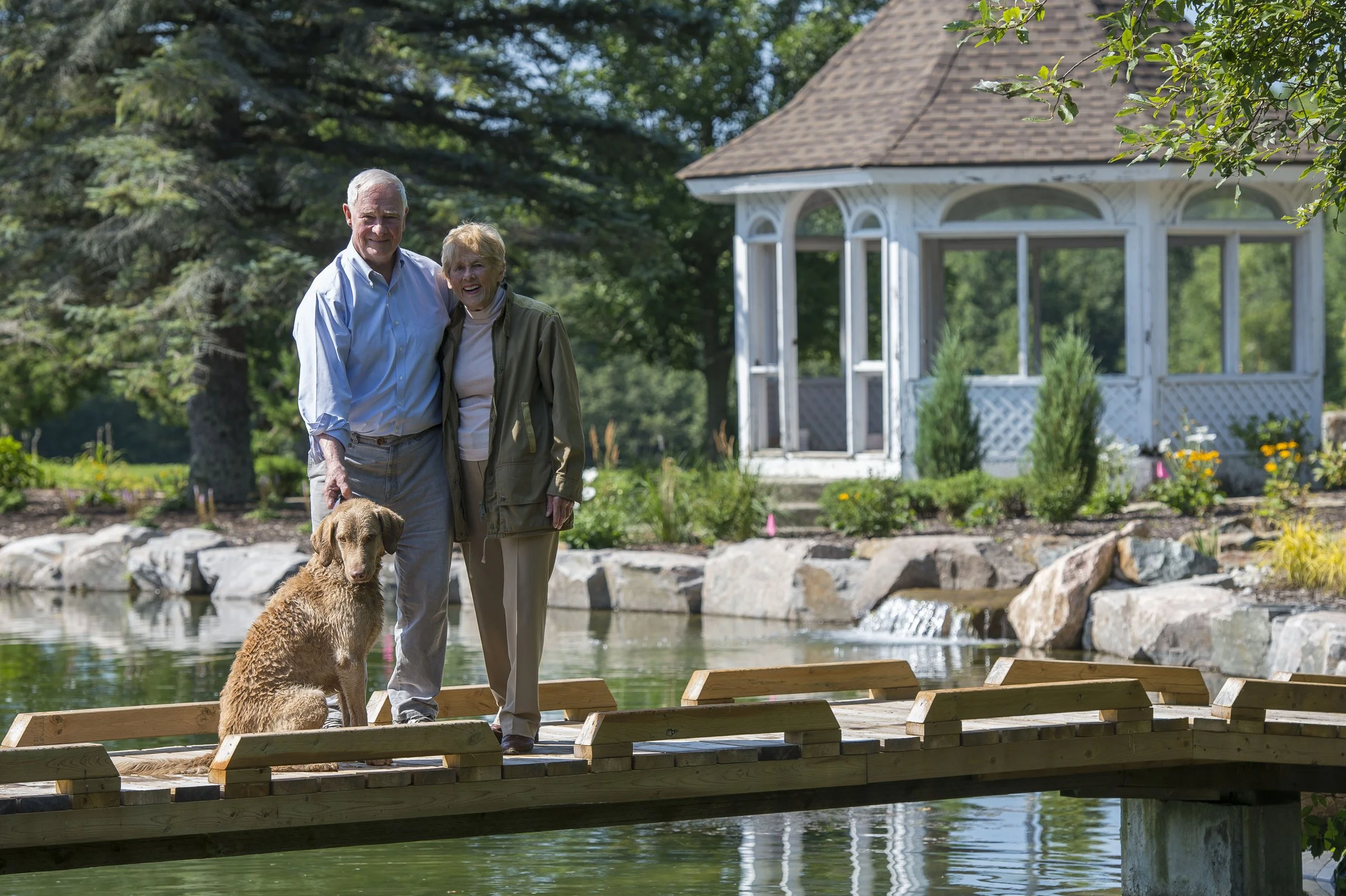
Honourary Patrons of Trees for Life:
The Right Honourable David Johnston, former Governor General of Canada and Sharon Johnston
Our honourary patrons Sharon and David Johnston (the former Governor General of Canada) know something about trust. David wrote a remarkable book titled Trust:Twenty Ways to Build a Better Country, in 2018. In his introduction he says, “Trust is a flowering seed that must be cultivated, and we must be its diligent gardeners.”
If you know anything about me you likely will not be surprised at how fitting this quote is, as I am a (retired) career gardener and communicator. It has always been my mantra that the message is about the average Canadian who just wants to get the most out of the gardening experience. It has certainly not been about me, or anyone other than you: the person with a question or curiosity about gardening. What I valued most over my career was the trust that Canadians had in my gardening advice.
Tree planting is no different than gardening, as we plant, nurture and grow. Simple.
But let me be the first to say that it really isn’t simple.
Finding the right tree for each space takes work. Planting is work. Nurturing is work and it is the most overlooked step in the process of growing a tree. Which is why for every dollar that we invest in acquiring and planting a tree we invest one more dollar in nurturing it. We protect it from vermin, weeds and, of course, we water it. For three years. Until it becomes a “tree-teenager,” able to put down more roots and take care of itself through wind, cold, and drought.
I mention this as Trees For Life is a part of the charitable landscape in Canada. One of over 60,000 registered charities. You donate your hard-earned money, we invest it in urban tree planting and we match it, usually twice, and sometimes three times.
All of this to say: we know what it takes to earn your trust and we are ever grateful for it.
Further, we have a lean staff who work diligently and with purpose: they find the right partners for tree planting and work with them to make sure that our survival rate is better than 80%. Each of our planting partners are required to match TFL funds.
As a donor you are right to question the competence of the charities that you support. And the trust that you have in your favourite charities is earned, not a given.
If there is one goal worthy of our pursuit to green urban Canadian spaces, it is this: to earn your trust as quality urban tree planters (growers!) through our competence and expert execution.
I promise you that we will continue to make an effort to do this right. And you will have helped us achieve something great.
With a toast to the future generations that will gain from your trust in our work.
As ever, yours,

Mark
Chair, Trees for Life
P.S. below a list of “competencies” that we pride ourselves in at Trees For Life from our Executive Director Marina Dimitriadis. We hope that all of these add value to your Trees For Life experience:
Innovation in our work - using new tree planting techniques (Mini-forests) or climate-smart approaches (densely planting trees 1m apart - different than mini-forests) for flood resilience;
Measuring impact - tracking tree survival and biodiversity so donors see real results;
Partnerships and collaboration - working with communities and other organizations to amplify impact (e.g. Green Communities Canada);
Learning and adapting - adjusting our methods based on lessons learned and challenges (e.g., getting a species list for reporting to interested donors).
